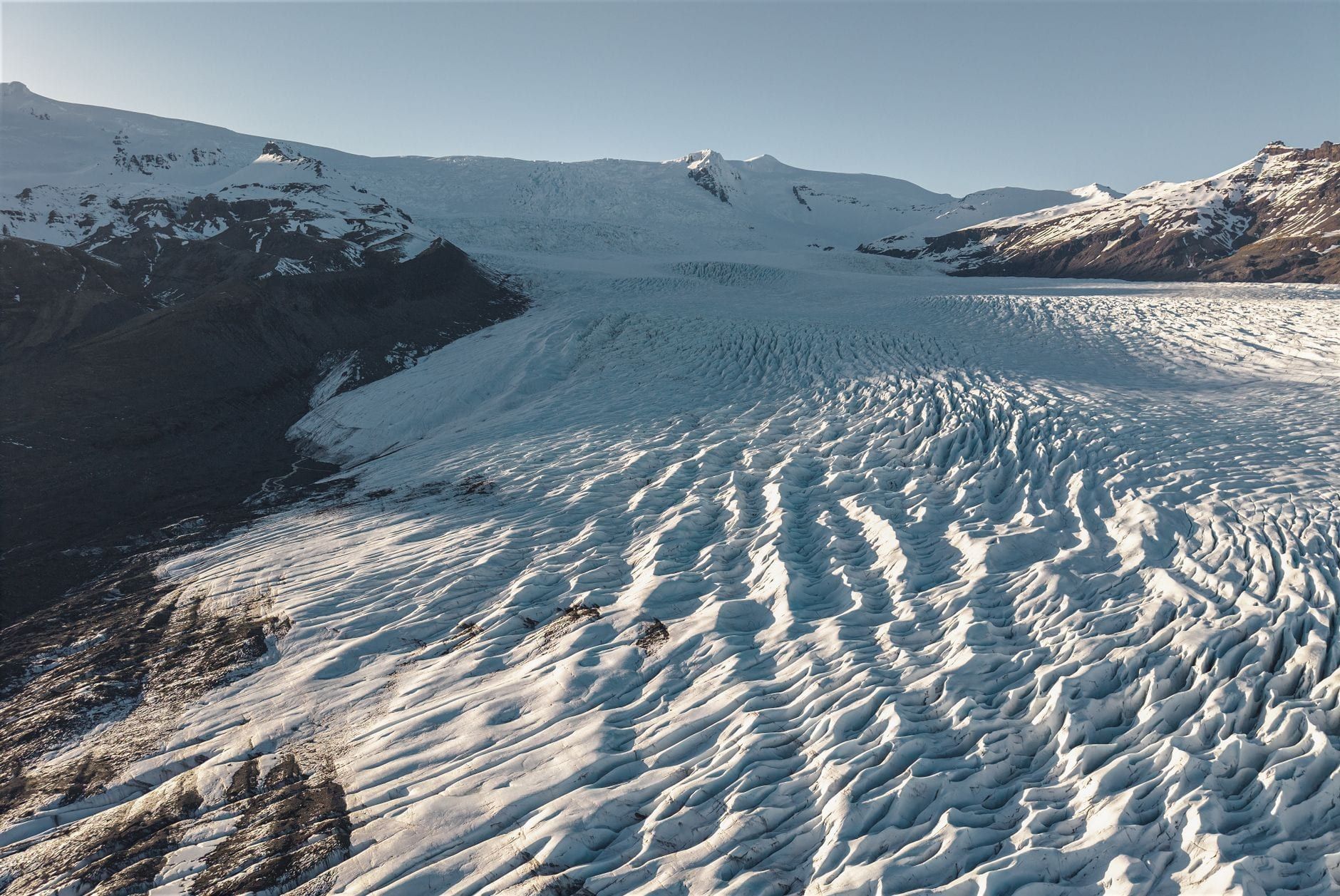
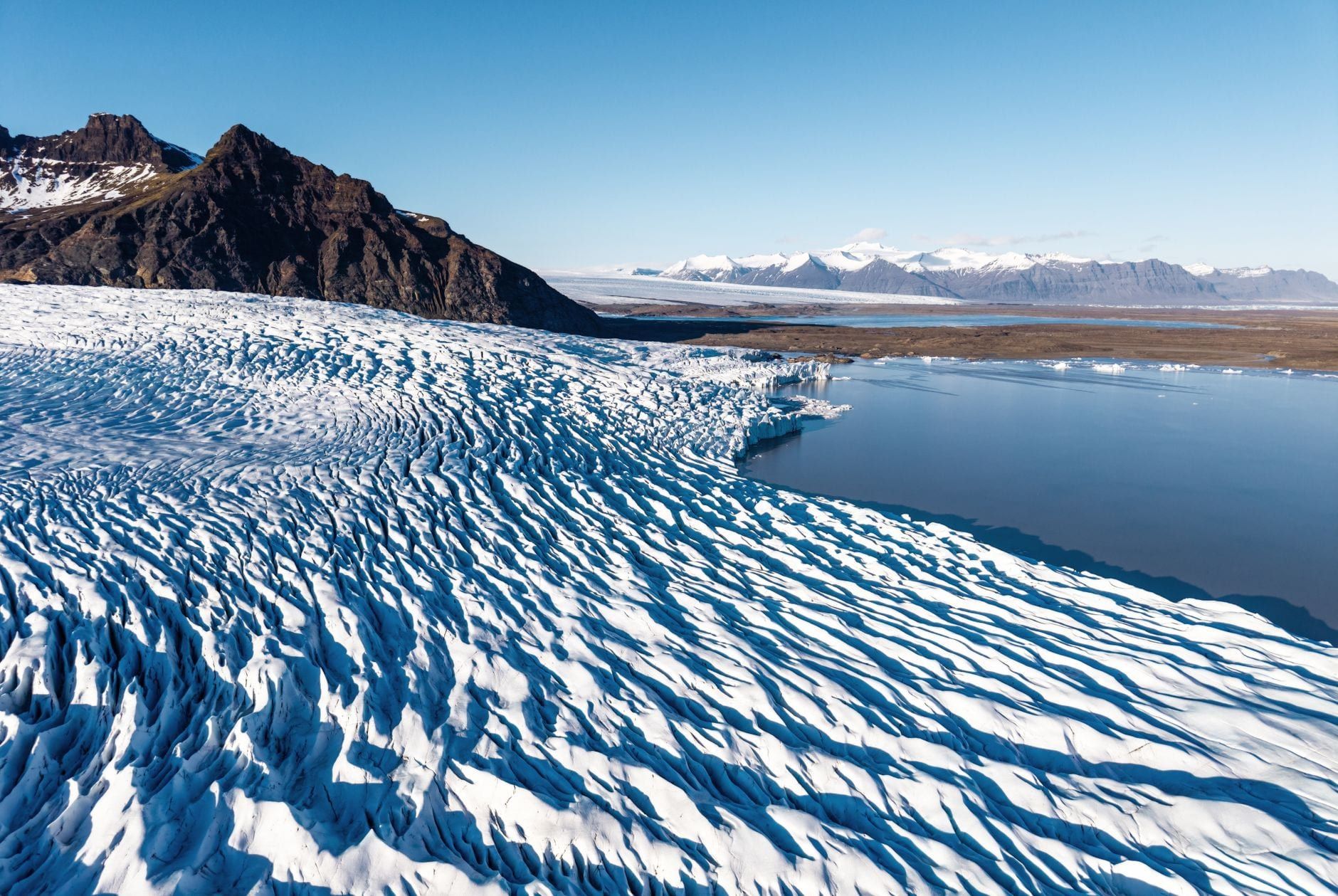
Guides use the name Crystal Ice Cave for whichever safe formation they're currently running tours through inside Breiðamerkurjökull, an outlet glacier off Vatnajökull's southeastern edge. It isn't marked on any permanent map, because it doesn't stay in one place — last year's tunnel may have collapsed, and this year's cave could sit a hundred meters away with a completely different shape.
This guide covers what the cave actually looks like inside, where to find it relative to Jökulsárlón Glacier Lagoon, when the season runs, what a tour costs and involves, and how it compares against Iceland's other ice caves.
What Is the Crystal Ice Cave (And Why Is the Ice So Blue)?
Summer meltwater cuts tunnels through the glacier; each autumn, falling temperatures refreeze and stabilize those channels into the walk-in chambers tours use that winter. Every newly opened cave gets its own nickname from the guides who find it, which is why last year's photos rarely match what you'll see this season.
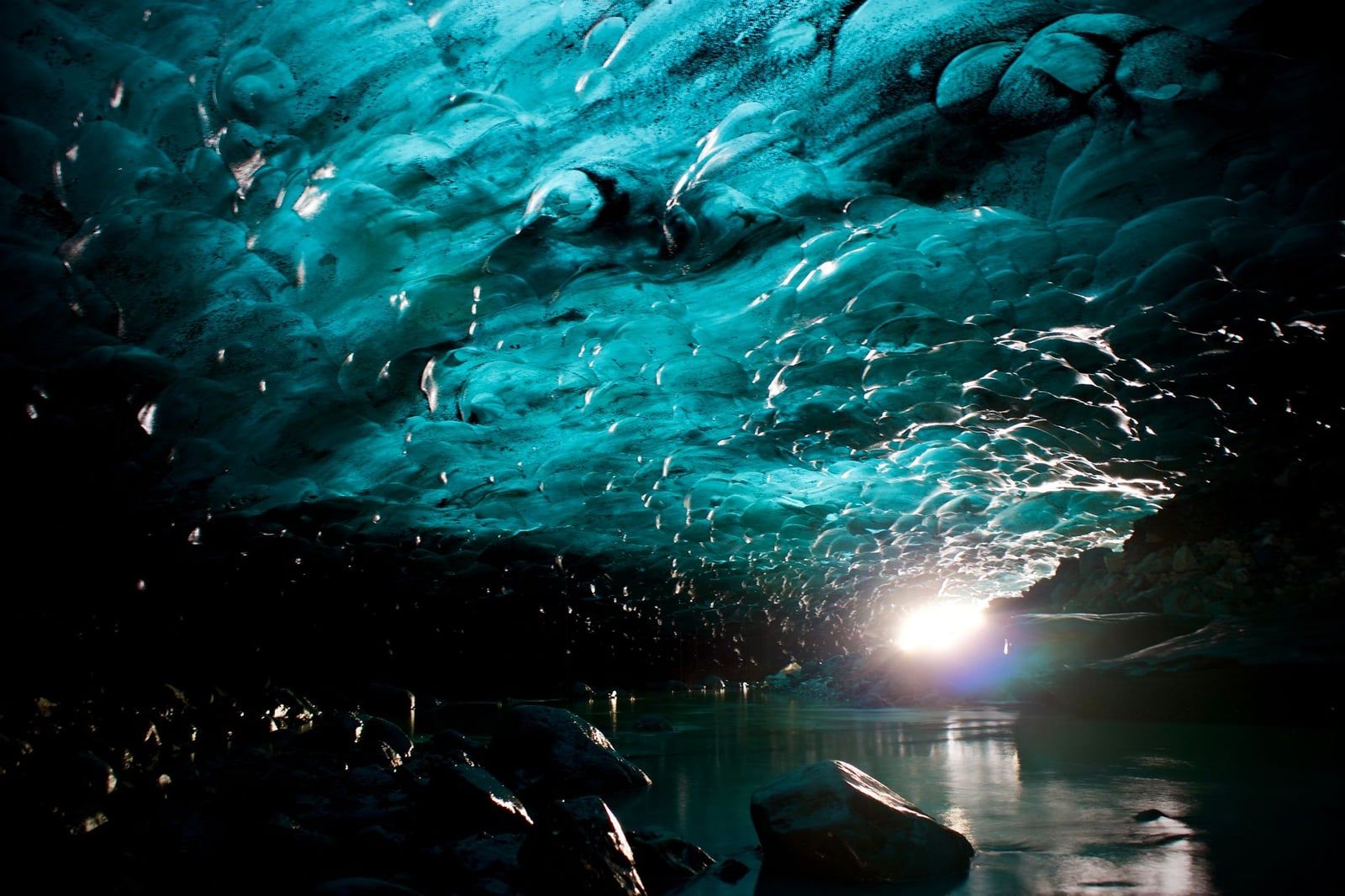
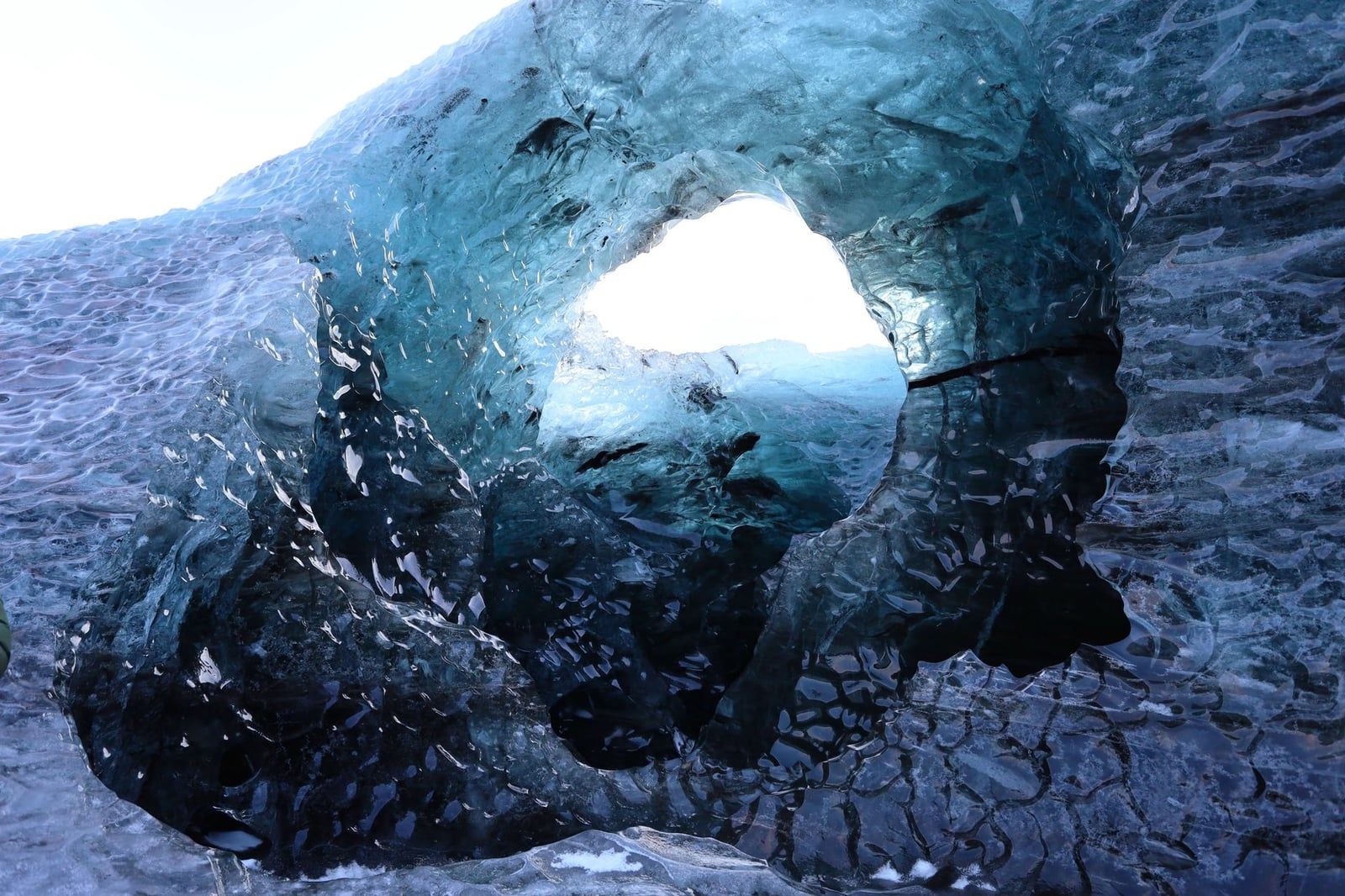
That blue comes from serious compression. Fresh snow and ordinary ice are full of tiny air bubbles that scatter light in every direction, which is why they look white. Centuries of pressure squeeze those bubbles out of glacier ice, and the denser result absorbs the red end of the light spectrum while reflecting back blue — the same basic mechanism that makes deep water look blue. The oldest, most compressed ice inside the cave usually shows the deepest color.
Breiðamerkurjökull's ice runs cleaner than the caves under Mýrdalsjökull near Vík, where centuries of ash from Katla volcano streak the walls black and grey. Come here for pure, saturated blue. Go to Katla if you want the volcanic drama mixed in.
A warming climate is squeezing the season. Vatnajökull National Park's guides report natural ice caves now forming later in autumn and melting earlier in spring, which shortens the safe window each year and pushes operators to switch formations mid-season more often than they used to. Book early, and don't be surprised if the cave you researched online has already changed shape by the time you arrive.
Where the Crystal Ice Cave Is & When to Go
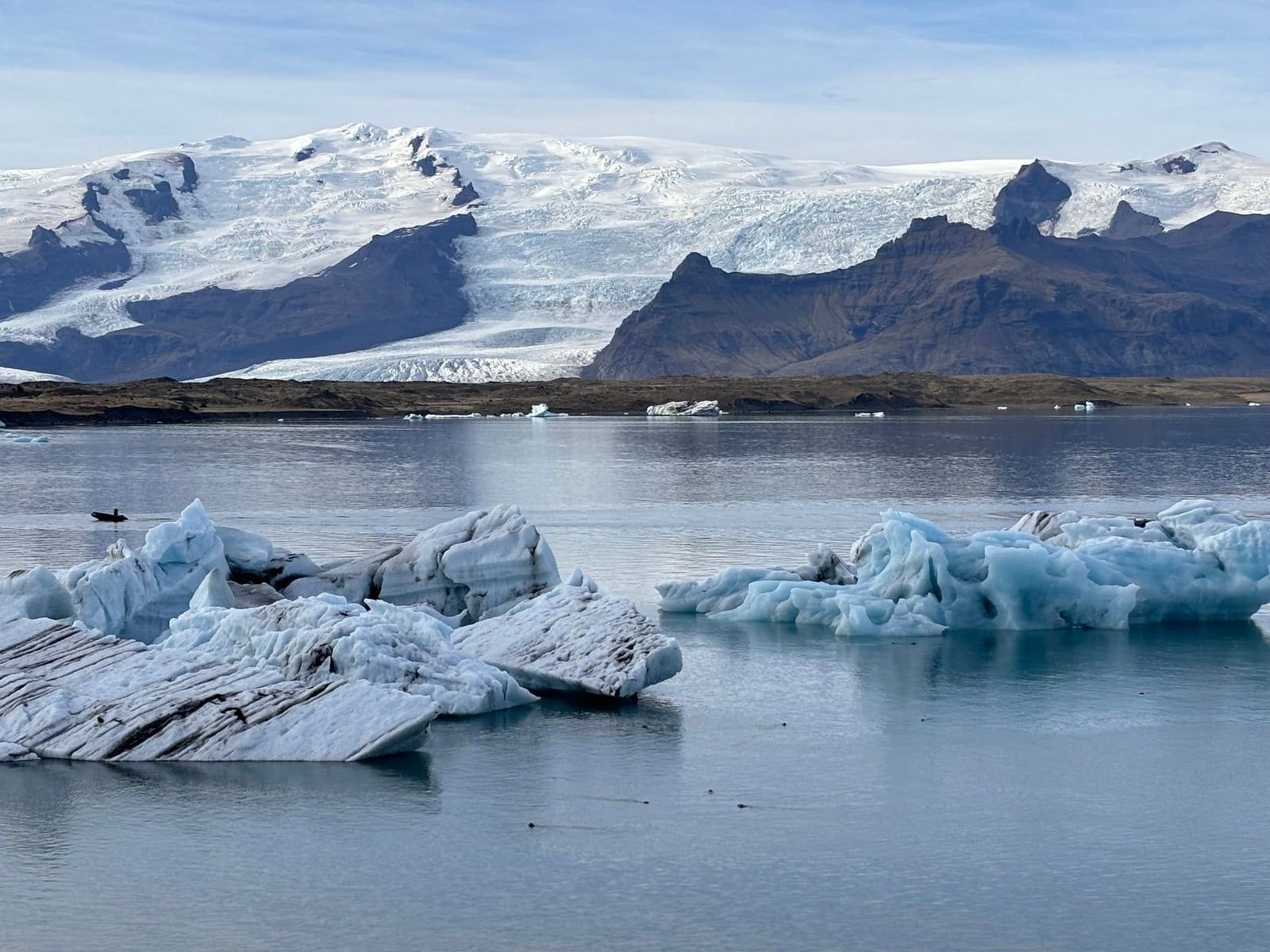
The cave sits inside Breiðamerkurjökull, within Vatnajökull National Park, a short hop from Jökulsárlón Glacier Lagoon, which doubles as the standard meeting point for every operator running cave tours. The park, established in 2008, covers the whole ice cap plus the former Skaftafell and Jökulsárgljúfur parks — 14,967 km² in total, the largest national park in Europe outside Russia's Yugyd Va.
Driving from Reykjavík to Jökulsárlón takes about 5 hours along Route 1, the Ring Road, covering roughly 380 km past waterfalls and black-sand beaches on Iceland's south coast. Full route and transport details are worth checking before you go, since many travelers split the drive with an overnight in Vík or Höfn rather than pushing through both ways in a day. Prefer not to drive at all? Day tours from Reykjavík handle the transport end to end, though they add hours in a coach on top of the tour itself.
Tours run October through April, closing once spring meltwater destabilizes the tunnels. Vatnajökull National Park's manager, Steinunn Hödd Harðardóttir, points to November through March as the sweet spot, when consistent freezing temperatures firm up the ice and sharpen its color; December through February tends to be the most structurally stable stretch of all. There's no park entrance fee, though a regional parking charge applies at the Jökulsárlón service area — current rates and hours are listed separately from what tour operators charge for the cave itself.
How to Visit: Guides, Tours, Cost & Duration
Entering the cave without a certified glacier guide is illegal and dangerous, full stop. Guides inspect ice stability every morning before deciding whether a tour runs at all, and they'll reroute the group to a different cave, or cancel outright, if conditions look shaky. That daily check is exactly why the tour can visit a different cave depending on which week you book.
Every tour starts at Jökulsárlón, then transfers by super jeep across the glacial outwash plain and up onto the ice margin, since normal cars can't reach the cave entrances. Inside, guides lead small groups through the ice for around 30 minutes, pointing out frozen air bubbles, ash bands, and meltwater channels, before the jeep ride back down. Door to door, the whole thing runs about 2-3 hours.
Budget roughly $150-220 USD, or about 20,000-25,000 ISK, for a standard super-jeep cave tour departing from Jökulsárlón. Multi-day South Coast packages that bundle the cave with a glacier hike or northern lights hunt cost more but save you the logistics of stitching separate bookings together. It's worth comparing a few ice cave tour operators before you commit, since inclusions like jeep transfer, gear, and group size vary more than the headline price suggests.
Most operators set a minimum age around 8, though a handful will take children from 6 — check the specific listing rather than assuming. Cancellations are typically free up to 24 hours before departure, and tours scrubbed for weather get rebooked or refunded rather than forfeited outright.
You don't need a full multi-day package just to see the cave. Book a single super-jeep tour, either in advance or once you're in the area, and self-drive the rest of your South Coast route for more flexibility than a fixed guided loop allows. Browse the full spread of Vatnajökull tours if you're still deciding how much structure you want built into the trip.
What to Expect Inside the Cave
Inside, the walls curve overhead in translucent blue, streaked with white frost feathers and strings of tiny air bubbles trapped mid-rise when the ice froze. Meltwater still trickles along the floor in spots, and the light shifts from near-black at the entrance to a glowing sapphire deeper in, where the ice runs thickest. Guides narrate as you walk, explaining how the tunnel formed and pointing out ash layers left behind by old eruptions.
Crystal Ice Cave is really a rotating title for whichever formation is safe that season, and every new discovery gets its own name from the guides who find it. One past iteration, nicknamed Anaconda, ran more than 100 meters deep at one end and had a second opening, a moulin, punched clean through the ice above. In 2023, guides found a fresh cave between Falljökull and Virkisjökull and called it Big Mac, tracing about 30 meters into the glacier. Ask your guide what this year's cave is called — it changes the story you get to tell afterward.
Bring a camera with manual settings if you have one; a wide-angle lens captures more of the cave's scale, and a small tripod helps in the low light without resorting to flash, which just bounces harshly off the ice. A phone shot at a longer exposure works fine too. Don't let gear anxiety get in the way of actually looking around.
Safety Tips & What to Pack
Follow the guide's route exactly, keep your hands off the ice walls, and stay with the group. A cave that's stable at nine in the morning can shift by afternoon if temperatures move even a couple of degrees. Weather on the glacier turns fast, so guides sometimes cut a visit short or change plans on the spot — when that happens, trust the call.
Tours supply helmets and crampons, and sometimes poles for the walk to the entrance. Layer up yourself: waterproof base and outer layers, insulated gloves, a warm hat, and boots sturdy enough to take crampons. Inside, temperatures sit around -5 to -2°C (23 to 28°F) — close to freezing, and colder than it looks in photos where everyone's smiling.
- Waterproof base and outer layers
- Insulated gloves and a warm hat
- Sturdy waterproof boots
- Sunglasses and sunscreen
- Snacks and water for the jeep ride
Sunlight bouncing off the surrounding glacier and snowfields is stronger than most people expect, even under cloud. There's no shop out on the ice, so pack whatever snack or water you'll want before the jeep leaves.
Crystal Ice Cave vs Other Iceland Ice Caves
Iceland has several well-known ice caves, and the right one depends on when you're visiting and how much walking you want to do beforehand. Here's how the Crystal Ice Cave compares against the other three most-visited options on season, access, and effort.
| Ice Cave | Season | Access | Difficulty |
|---|---|---|---|
| Crystal Ice Cave (Breiðamerkurjökull) | October-April | Super jeep from Jökulsárlón, short walk | Easy |
| Skaftafell Blue Ice Cave (Falljökull) | October-April | Guided glacier hike | Moderate |
| Katla Ice Cave (Mýrdalsjökull, near Vík) | Year-round | Super jeep, short walk | Easy |
| Langjökull Ice Tunnel (near Húsafell) | Year-round | Monster truck to man-made tunnel | Easy |
Katla runs year-round and sits closest to Reykjavík, with black volcanic ash streaked through the blue — the easiest single-day add-on if you're short on time. Skaftafell's Blue Ice Cave means a real glacier hike across Falljökull with a guide, not just a jeep ride; read the hiking guide first if that's the route you want. Traveling with young kids, or wary of natural-cave unpredictability? Langjökull's engineered tunnel doesn't depend on seasonal conditions at all. The Crystal Ice Cave splits the difference: minimal walking, maximum blue, but only bookable in winter.
Nearby Attractions & Where to Stay
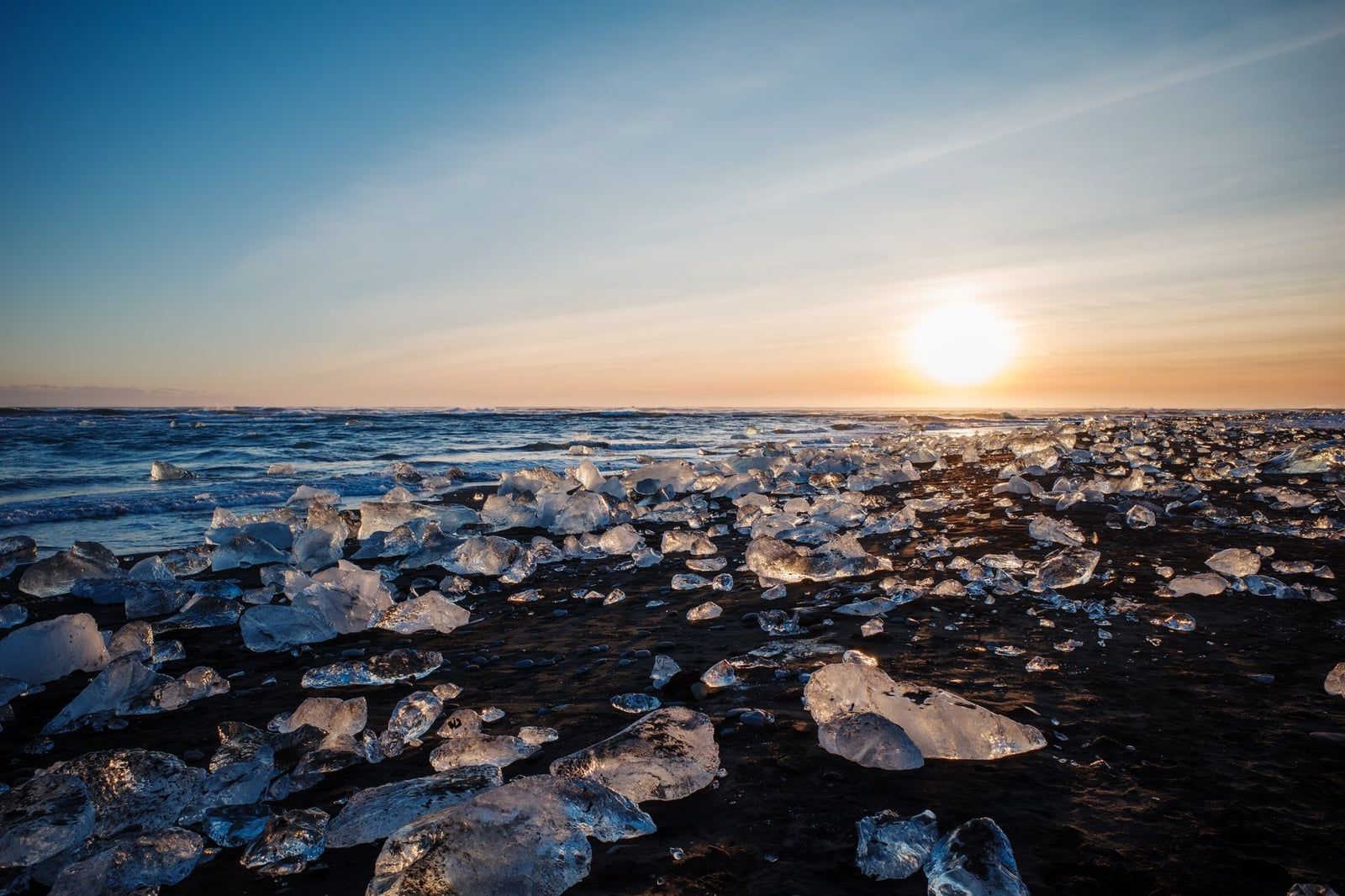
Most cave tours start right at Jökulsárlón, Iceland's deepest lake at 248 meters, where icebergs calved from Breiðamerkurjökull drift slowly toward the sea. Walk the free shoreline or add a short boat tour among the floating ice; across the road, Diamond Beach scatters chunks of that same ice across black volcanic sand, especially striking at low sun.
Pair the cave with a guided glacier hike on Falljökull or Skaftafellsjökull, a snowmobile run higher onto the ice cap, or a northern lights hunt once the tour buses clear out for the night. Quieter Fjallsárlón lagoon, about 15 minutes from Jökulsárlón, gets you closer to an actual glacier face with a fraction of the crowd.
Höfn, about an hour east, is the region's main town and has the widest choice of hotels and restaurants. Hotels clustered right near Jökulsárlón cut a pre-dawn tour departure down to a few minutes' drive. Skaftafell and Kirkjubæjarklaustur, both further west, work well if you're combining the cave with Svartifoss or the South Coast waterfalls. Book early for December through February — rooms near Jökulsárlón sell out well ahead of peak winter.
FAQ
Do you need a guide to visit the Crystal Ice Cave?
Yes. Entering without a certified glacier guide is illegal and dangerous, and guides check ice stability every morning before running any tour at all.
When is the best time to visit the Crystal Ice Cave?
The season runs October through April, but November through March is best — consistent freezing temperatures firm up the ice and sharpen its color, with December through February the most structurally stable stretch.
How much does a Crystal Ice Cave tour cost?
Expect roughly $150-220 USD, about 20,000-25,000 ISK, for a 2-3 hour super-jeep tour from Jökulsárlón. Multi-day packages that bundle in other stops cost more.
How long do you actually spend inside the cave?
Around 30 minutes inside the cave itself, as part of a 2-3 hour tour that also covers the super-jeep ride to and from the glacier.
Is the Crystal Ice Cave the same cave every year?
No. Natural ice caves melt away each summer and reform in new shapes and locations each winter, which is why guides give newly discovered caves nicknames like Anaconda or Big Mac.
How cold is it inside the ice cave?
Roughly -5 to -2°C (23-28°F) — close to freezing, so warm waterproof layers matter even though you're sheltered from the wind.
Can children visit the Crystal Ice Cave?
Most operators set a minimum age around 8, though some allow children from 6. Check the specific tour's policy before booking.
How is the Crystal Ice Cave different from the Katla Ice Cave?
The Crystal Ice Cave is a seasonal (October-April) pure blue-ice cave inside Vatnajökull, near Jökulsárlón. Katla, under Mýrdalsjökull near Vík, runs year-round and shows black volcanic ash streaked through the ice instead.